
23
Jun
Picture this. It’s movie night, you’re curled up on the couch with a big bowl of popcorn, and there they are. Those big, hopeful eyes staring up at you, tail wagging, waiting for just one tiny piece to fall. You hesitate. So, can dogs eat popcorn, or are you about to make a mistake you’ll regret? It’s one of the most common questions dog parents ask, and the answer is more layered than a simple yes or no.
The good news? Popcorn isn’t inherently toxic to dogs. The not-so-good news? Most of the popcorn we actually eat is loaded with stuff that can upset your pup’s tummy or worse. Let’s break it all down so you can share snacks with peace of mind.
Here’s the straight talk. Plain, air-popped popcorn is generally safe for dogs in small amounts. Corn itself is a common ingredient in many dog foods, so a few unbuttered, unsalted kernels won’t hurt most healthy dogs. The trouble starts when we add all the delicious extras humans love.
So when someone asks “can dog eat popcorn,” the honest reply is: it depends entirely on how that popcorn is prepared. Naked popcorn? Mostly fine. Loaded popcorn? That’s where things get risky.
If you’re wondering whether dogs can eat plain popcorn, you’ll be glad to hear it’s the safest version by far. Air-popped popcorn with nothing on it is low in calories and contains small amounts of fiber, along with trace minerals like magnesium and zinc.
The key word here is plain. No butter, no salt, no sugar, no cheese powder. Just the popped corn itself. Think of it as an occasional crunchy treat, not a daily snack. A few pieces here and there make a fun, low-guilt reward.
This is where most owners go wrong. Can dogs eat popcorn with butter? It’s best to skip it. Butter is high in fat, and too much fat can lead to stomach upset, vomiting, diarrhea, or even pancreatitis over time. Pancreatitis is a painful and sometimes serious condition, so buttered popcorn isn’t worth the risk.
The same caution applies if you’re asking can dogs eat buttered popcorn at the movies or at home. The greasy coating that makes it so tasty to us is exactly what bothers a dog’s digestive system.
And can dogs eat popcorn with salt? Again, better not to. Salt in large amounts can lead to sodium ion poisoning, causing excessive thirst, vomiting, and in extreme cases, more dangerous symptoms. A single salty piece probably won’t cause harm, but salty snacks shouldn’t become a habit.

Sweet popcorn smells amazing, but it’s a no-go for your furry friend. Can dogs eat caramel popcorn? Please don’t share it. Caramel is basically sugar and butter cooked together, which means it combines two things dogs shouldn’t have. The high sugar content can lead to weight gain, dental problems, and digestive issues.
If you’ve been tempted to toss your dog a piece and wondered can a dog eat caramel popcorn safely, the answer stays the same. The sticky texture can also cling to teeth and even pose a mild choking concern.
Kettle corn falls into the same trap. Can dogs eat kettle corn popcorn? Skip it. Kettle corn blends sugar and salt, giving your dog a double dose of ingredients that strain their system. It tastes like a treat to us but acts like trouble for them.
Cheese-flavored snacks are everywhere, so it’s worth addressing. Can dogs eat cheese popcorn? It’s not recommended. The cheese powder is packed with sodium, artificial flavors, and fats that don’t sit well with dogs. Many cheese coatings also contain onion or garlic powder, both of which are genuinely toxic to dogs.
What about can dogs eat white cheddar popcorn specifically? Same answer. That tangy white cheddar dust may be irresistible to humans, but it carries the same sodium and seasoning concerns. The fancy flavor doesn’t make it any safer.
Microwave popcorn is convenient, but it’s a poor choice for sharing. Can dogs eat microwave popcorn? Avoid it. Microwave bags often contain artificial butter flavoring, extra salt, oils, and chemicals used in the packaging. None of these belong in your dog’s diet.
You might think a lighter brand is a better bet. Can dogs eat SkinnyPop popcorn? While SkinnyPop-style popcorn is simpler than many options, it still typically includes oil and salt. A stray piece won’t likely cause harm, but it’s not the clean, plain version your dog actually needs. When in doubt, make your own air-popped batch at home instead.
Here’s a risk people often overlook. Can dogs eat popcorn kernels? This is one to watch closely. Unpopped or half-popped kernels are hard, and they can become a choking hazard or get lodged in your dog’s teeth. They’re also tough to digest and may cause an upset stomach.
Small dogs are especially vulnerable to choking on kernels. Always check the bowl for those stubborn unpopped pieces before letting your pup anywhere near it.
This one trips a lot of people up because of the name. Can dogs eat popcorn shrimp? Despite sounding popcorn-related, popcorn shrimp is breaded, deep-fried shrimp with no actual popcorn involved. The heavy breading, frying oil, and seasonings make it an unhealthy choice for dogs. Plain, cooked, unseasoned shrimp can be okay in moderation, but the fried “popcorn” version should stay off the menu.
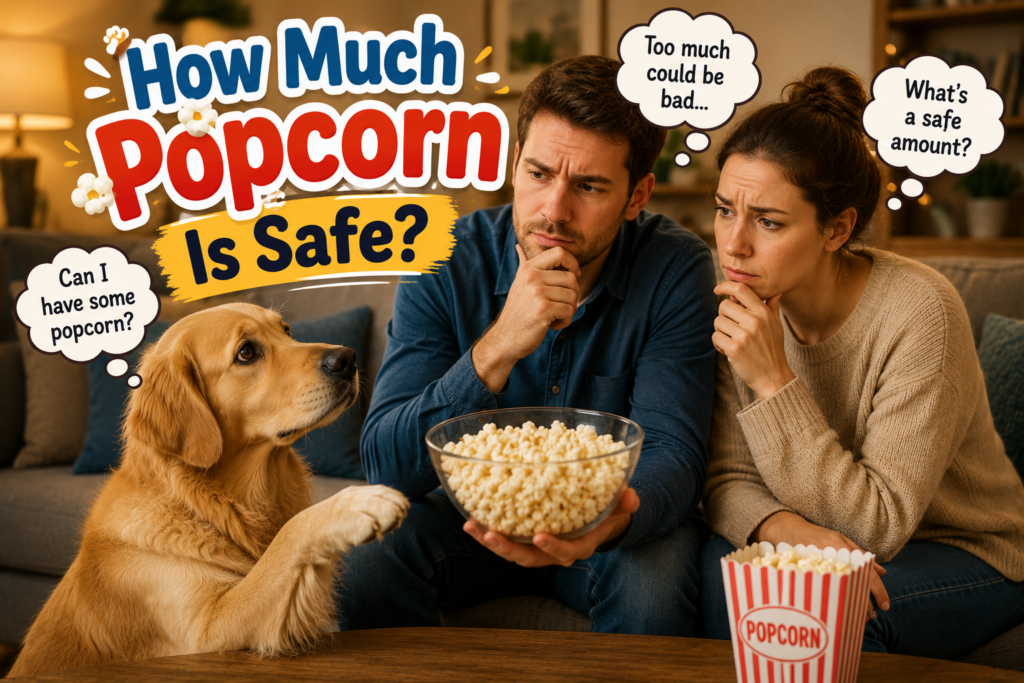
Let’s say you’ve decided to offer some plain, air-popped popcorn. Portion size matters. Treats of any kind should make up no more than 10 percent of your dog’s daily calories.
For a small dog, that means just a few pieces. For a larger dog, maybe a small handful. Popcorn is a snack, not a meal, so keep it occasional. If a friend asks can my dog eat popcorn every day, gently remind them that moderation is the golden rule.
Even safe popcorn comes with a couple of things to watch:
If your dog has a sensitive stomach, allergies, or a weight problem, check with your vet before introducing any new treat.
Accidents happen. Maybe your dog snagged a fallen piece of buttered or caramel popcorn while you weren’t looking. First, don’t panic. A single bite usually causes nothing more than a slightly unhappy tummy. Just like popcorns, it is important that you do good research on dog friendly vegetable to avoid any health risk.
Watch your dog over the next 24 hours for signs like vomiting, diarrhea, excessive drooling, restlessness, or refusing to eat. If you notice anything concerning, or if your dog ate a large amount of something seasoned with garlic or onion powder, call your veterinarian right away. When it comes to your dog’s health, it’s always better to ask than to wait.
To make life easier, here’s the rundown so you never have to second-guess can a dog eat popcorn at snack time:
So, can dogs eat popcorn? Yes, but only the plain, air-popped kind, and only in small amounts. Skip the butter, salt, cheese, caramel, and everything else that makes our movie-night bowl so tempting. Keep the kernels out, watch the portions, and your pup can enjoy a crunchy little treat right alongside you.
At the end of the day, those hopeful puppy eyes deserve a snack that loves them back. Reach for plain popcorn, keep it occasional, and movie night becomes something the whole family, four legs included, can enjoy safely.