29
Jun
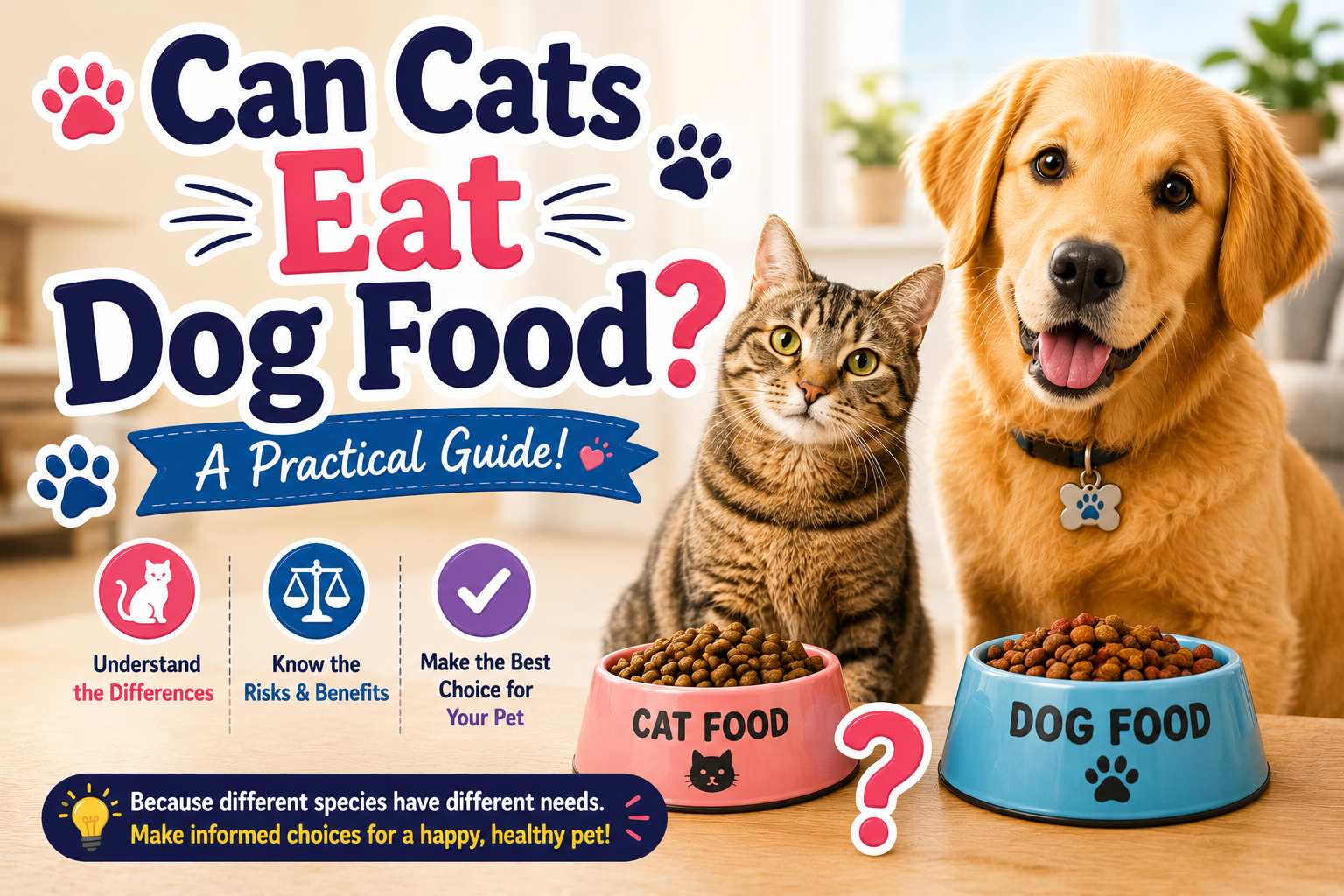
Can cats eat dog food? It’s a question that comes up more often than you’d think, especially in homes with both a cat and a dog. Maybe your cat keeps sneaking bites from the dog’s bowl, or you’ve run out of cat food and the dog’s kibble is right there. The quick answer is that a nibble won’t poison your cat, but dog food is the wrong fuel for a feline body. Below, you’ll learn exactly why that matters, what happens if your cat eats it once versus every day, and what to do when your curious kitty keeps raiding the wrong bowl.

Cats and dogs may share your home, but their bodies have very different needs. Dog food is formulated for dogs. It’s built around what a dog’s digestive system and metabolism require—and those needs simply don’t match a cat’s.
Here’s the core issue: cats are obligate carnivores. That means they must eat meat to survive and thrive. Dogs, on the other hand, are omnivores, so their food includes more plant-based ingredients and a different nutrient balance. When you ask “can cat eat dog food” and expect it to keep your cat healthy, the formula falls short in several critical ways.
Can cats eat dog food safely? Cats need far more protein than dogs do. Dog food contains protein, but usually not enough to meet a cat’s higher requirements. Over time, a cat eating mostly dog food won’t get the building blocks it needs for muscle, energy, and a healthy coat.
So while you might wonder “can my cat eat dog food” to fill a gap, the protein levels alone make it a poor long-term match.
This is the big one. Taurine is an amino acid that cats cannot produce in adequate amounts on their own. They have to get it from their diet. Most dog foods don’t contain enough taurine because dogs can make their own.
A taurine deficiency in cats is serious. It can lead to:
These aren’t minor concerns. They’re exactly why cats can’t eat dog food as a regular diet without real risk to their health.
Cats also need preformed vitamin A and a fatty acid called arachidonic acid directly from animal sources. Dogs can convert other nutrients into what they need, but cats can’t. Dog food typically isn’t fortified with these in cat-appropriate amounts, leaving another gap if it becomes the main meal.
Quick takeaway: Dog food isn’t toxic to cats, but it’s nutritionally incomplete. The danger comes from what’s missing, not from anything harmful inside.
Yes—in small, occasional amounts. If your cat licks the dog’s bowl clean once or steals a few pieces of kibble, there’s no need to panic. A single accidental snack won’t cause harm. The trouble starts when dog food becomes a habit or a replacement for proper cat nutrition.
This is the heart of why cats can’t eat dog food as a steady diet: it’s about cumulative deficiency over time, not immediate poisoning.

One bite or one meal of dog food usually causes nothing more than mild reactions, if any. Your cat may experience a little stomach upset, but most cats handle a small amount just fine. Their bodies have plenty of stored nutrients to ride out a single off-menu snack.
So if you’re asking “can cats eat dog food for a couple days” during an emergency, the answer is a cautious yes—it’s better than your cat going hungry. Just treat it as a short-term stopgap, not a plan.
Life happens. Maybe the pet store is closed, or you forgot to restock. In a genuine pinch, letting your cat eat dog food for a day or two won’t cause lasting damage. The key is to switch back to proper cat food as soon as you can.
Think of it like a person eating fast food for a couple of days. It won’t ruin your health overnight, but it’s not how you’d want to eat long term.
The format changes the texture, but not the core nutritional problem. Let’s break it down.
Can cats eat wet dog food without trouble? In small amounts, yes. Wet dog food and canned dog food are softer and often more appealing to cats because of the moisture and aroma. But “can a cat eat wet dog food” as a meal still runs into the same taurine and protein shortfalls. The wet texture doesn’t fix what’s missing.
The same goes for anyone wondering “can cats eat canned dog food” or “can cats eat soft dog food.” It’s fine occasionally, but it won’t meet feline needs.
Dry dog food, or kibble, is the most common type cats sneak. Can cats eat dry dog food safely? A few pieces won’t hurt, but the kibble is shaped, sized, and balanced for dogs. When people ask “can cats eat dog food dry” as a substitute, the answer is the same: occasional is okay, regular is not.

Stray and outdoor cats often eat whatever they can find, and that sometimes means dog food left outside. So can stray cats eat dog food to survive? In the short term, it provides calories and keeps them from starving. For a hungry stray, dog food is better than nothing.
But the same nutritional gaps apply. Stray cats fed dog food long term will eventually suffer the same deficiencies as house cats. If you’re caring for strays, offering proper cat food whenever possible makes a real difference.
If a cat eats dog food regularly, problems creep in slowly. Watch for these warning signs:
The early signs may seem minor. The serious ones—especially anything heart- or vision-related—mean it’s time to see your vet quickly.
A cat that constantly raids the dog’s bowl needs a few simple management changes. Try these steps:
These small adjustments usually stop the bowl-stealing for good.

Since many owners juggle both pets, the flip side comes up just as often. So can dogs eat cat food? A little won’t hurt, but it’s not ideal in reverse either.
Cat food is very high in protein and fat—great for cats, but too rich for dogs. If you’re asking “can my dog eat cat food” or “can dog eat cat food,” a stolen bite is fine, yet regular feeding can cause problems.
The reason why dogs can’t eat cat food long term comes down to that richness. Whether it’s “can dogs eat dry cat food,” “can dogs eat wet cat food,” or “can dogs eat canned cat food,” the high fat content is the concern. This is also why people search “can dogs eat hard cat food” or “can dogs eat cat wet food”—the format varies, but the issue stays the same.
Too much rich cat food can lead to:
Can a dog die from eating cat food? It’s extremely unlikely from a small amount. A single serving—or even “can a dog eat cat food in a pinch”—won’t be fatal. The bigger risk comes from repeated overfeeding, which can trigger pancreatitis in sensitive dogs. So while “can a dog eat cat food” once is no emergency, it shouldn’t become routine.
Whether it’s “can dogs eat cat food dry,” “can dogs eat cat dry food,” or just a curious nibble, the rule mirrors the cat situation: occasional is fine, regular is not.
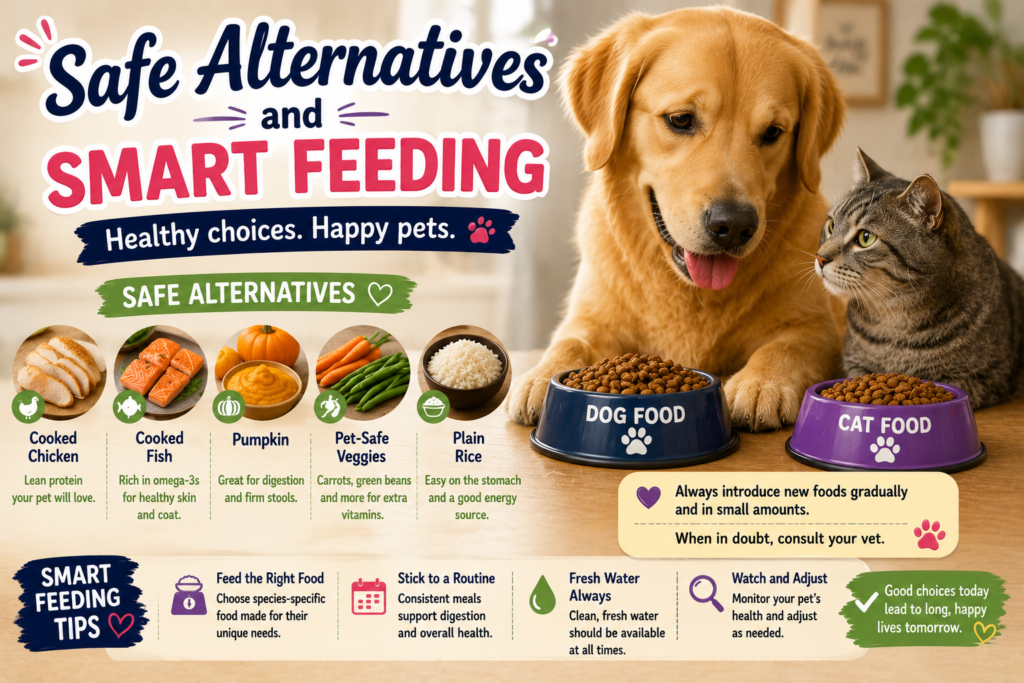
The best solution is the simplest one: feed each pet the food made for its species. For cats, that means a complete and balanced cat food with proper taurine, protein, and vitamin levels. If you’re raising a kitten, understanding its nutritional needs goes hand in hand with knowing when cats stop growing. Read our complete guide on When Do Cats Stop Growing? to learn how your cat’s age affects its diet and development.
If you want to offer your cat variety or treats, try these instead of dog food:
These give your cat real nutrition and the variety it craves without the risks.
So, can cats eat dog food? They can survive an occasional bite or a couple of emergency days, but dog food should never replace proper cat nutrition. The problem isn’t toxicity—it’s everything dog food lacks. Without enough protein, taurine, vitamin A, and arachidonic acid, a cat’s health quietly declines over time, with serious risks to the heart and eyes.
If your cat keeps sneaking dog food, separate their meals, feed on schedules, and consider a smart feeder. And if you notice weight loss, a dull coat, or any signs of illness, check in with your vet. The safest path is the easiest one: keep cat food for cats and dog food for dogs, and both pets will thrive.