
14
Jun

If you’ve ever caught your dog staring at your dinner plate with those hopeful eyes, you know the temptation to share. Sweet potatoes pop up in tons of dog foods and treats, so it makes sense to wonder whether they’re actually good for your four-legged friend. The short answer brings good news: yes, dogs can enjoy sweet potatoes when they’re prepared the right way.
But like most things in pet care, the details matter. Let’s walk through everything you need to know so you can feed this tasty veggie with confidence.
Sweet potatoes are one of the safest human foods you can offer your pup. They’re packed with nutrients that support your dog’s overall health, and most dogs absolutely love the natural sweetness. So when friends ask, “Can dogs eat sweet potatoes?”, you can happily tell them yes—with a few simple guidelines.
The key is moderation and proper preparation. A plain, cooked sweet potato served in small amounts can be a wonderful occasional treat. Problems usually come from how the potato is prepared, not the potato itself. Loads of added butter, sugar, salt, or spices can turn a healthy snack into something that upsets your dog’s stomach.

There’s a reason sweet potatoes show up in so many quality dog foods. They offer real nutritional value, including:
The fiber content is especially helpful for dogs with sensitive tummies or irregular bathroom habits. Plus, sweet potatoes are naturally low in fat, which makes them a smart choice for pups watching their waistline.

This is where a lot of owners get tripped up. So, can dogs eat raw sweet potatoes? It’s best to avoid them. Raw sweet potatoes are tough, hard to chew, and difficult for dogs to digest. They can also pose a choking hazard or cause an upset stomach.
If you’re wondering “can dog eat raw sweet potato” at all, the honest answer is that it’s not worth the risk. Cooking softens the potato and makes the nutrients easier for your dog’s body to absorb.
On the flip side, can dogs eat cooked sweet potatoes? Absolutely. Cooked sweet potatoes are gentle on the digestive system and far easier to mash, dice, or serve. Just be sure they’re plain—no oils, seasonings, or toppings.
Speaking of cooking methods, can dogs eat baked sweet potatoes? Yes, and baking is one of the best options. A plain baked sweet potato keeps its nutrients without any added fats. Boiling or steaming works well too. The goal is simple: cook it soft and skip the extras.
Lots of people ask, “Can dogs eat sweet potato skins?” The skin isn’t toxic, but it can be tricky. The peel is tougher than the flesh and harder to digest, especially for smaller dogs or those with sensitive stomachs.
If you’re asking whether dogs can eat sweet potatoes with skin, the safest move is to peel them first. Can dogs eat the skin of a sweet potato in a pinch? A small amount of clean, well-cooked skin probably won’t hurt a larger dog, but it can lead to digestive upset for others. When in doubt, can dog eat sweet potato skin questions are best answered by removing it altogether. Peeling takes seconds and saves you worry later.
Here’s where we have to be a little more cautious. Can dogs eat sweet potato fries? It’s best to say no. Even though they start as a healthy vegetable, fries are usually cooked in oil and loaded with salt and seasonings. All that fat and sodium can lead to stomach trouble or, over time, more serious health issues like pancreatitis.
The same goes for desserts. Can dogs eat sweet potato pie? Please don’t share it. Pie is full of sugar, butter, and spices like nutmeg, which can actually be harmful to dogs in larger amounts. The crust adds extra fat and refined carbs your pup doesn’t need. Keep the pie for yourself and offer your dog a plain piece instead.
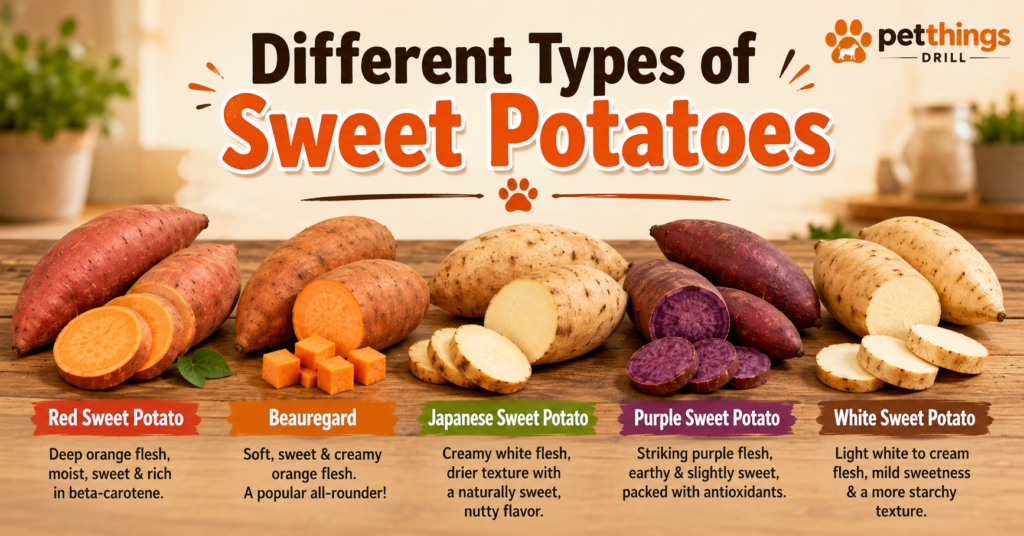
Sweet potatoes come in several colors and varieties, and pet parents often wonder if some are better than others. The good news is that the safe ones are all similar in terms of dog-friendliness.
Can dogs eat purple sweet potato? Yes. Purple sweet potatoes contain antioxidants called anthocyanins, the same compounds found in blueberries. They’re a perfectly safe treat when cooked plain.
Can dogs eat japanese sweet potatoes? They can. Japanese sweet potatoes have purple skin and pale flesh, and they’re just as safe as the orange variety once cooked and peeled.
Can dogs eat white sweet potatoes? Yes again. White sweet potatoes are milder in flavor but offer similar nutrients. As always, cook them and serve them plain.
No matter the color, the rules stay the same: cook it, peel it, keep it plain, and serve it in moderation.
This is one of the most important questions to get right. So, how much sweet potato can a dog eat? Like any treat, sweet potatoes should make up only a small part of your dog’s diet—generally no more than about 10 percent of their daily calories.
Here’s a rough guide based on size:
Start with a small amount the first time and watch how your dog reacts. Every pup is different, and some have more sensitive stomachs than others. Too much sweet potato at once can cause loose stools or gas, simply because of the fiber.
Now that we’ve covered the basics, here’s how to serve sweet potatoes the right way:
You can stir a spoonful into your dog’s regular food, freeze small chunks for a chewy summer treat, or offer it on its own. Dehydrated sweet potato slices also make great homemade chews, as long as they don’t have any added ingredients.

Even healthy foods can disagree with some dogs. After introducing sweet potato, keep an eye out for:
These signs usually mean your dog ate too much or has a sensitivity. Most mild cases clear up on their own once you stop offering the treat. If symptoms last more than a day or seem severe, it’s time to call your vet.
While sweet potatoes are safe for most dogs, a few situations call for a quick chat with your vet first. Dogs with diabetes should eat sweet potatoes only in tiny amounts, since the carbohydrates can affect blood sugar. Pups with a history of digestive issues, food allergies, or weight problems may also need special guidance.
If you’re ever unsure whether a dog can eat sweet potatoes given their specific health needs, your veterinarian knows your pet best and can give you tailored advice.
So, can a dog eat sweet potatoes? Yes—and many dogs find them downright delicious. When cooked plain, peeled, and served in small portions, sweet potatoes make a nutritious and tasty addition to your dog’s treat rotation. Just steer clear of fries, pie, raw potatoes, and heavy seasonings.
Treat sweet potatoes as an occasional snack rather than a daily staple, introduce them slowly, and pay attention to how your dog responds. Do that, and you’ve got a wholesome treat that supports your pup’s health while making those hopeful dinnertime eyes a little harder to resist. When in doubt, your vet is always your best resource for keeping your furry friend happy and healthy.