08
May
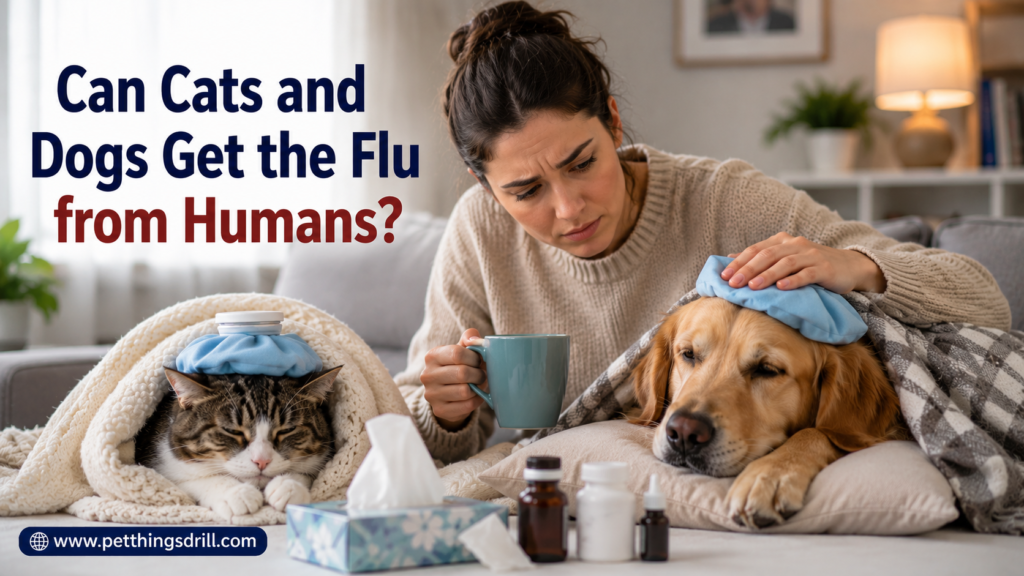
When you come down with a terrible case of the seasonal flu, your first instinct might be to snuggle up in bed with your furry best friend. After all, a warm dog or a purring cat makes the perfect companion when you feel under the weather. But as you cough and sneeze, a worrying thought might cross your mind: can cats and dogs get the flu from humans?
It is a completely valid question for any responsible pet parent to ask. We share our homes, our furniture, and our lives with our animals, making the idea of sharing our illnesses a scary prospect.
In this article, we will explore the science behind cross-species illness, the signs that your pet might be sick, and the best ways to protect your four-legged family members during cold and flu season. You will walk away knowing exactly how to handle your next sick day without putting your pets at risk.
Viruses are usually host-specific. This means that a virus adapted to infect a human cell usually lacks the right “keys” to enter a dog or cat cell. Because of this biological barrier, the vast majority of colds and viruses you catch will never affect your pets.
However, viruses are also highly adaptable. They mutate and change over time. Occasionally, a virus mutates in a way that allows it to jump from one species to another. This phenomenon is known as zoonosis when an animal infects a human, and reverse zoonosis when a human infects an animal.
When we ask, can cats and dogs get the flu from humans, we are talking about reverse zoonosis. Studies show that yes, it is entirely possible for pets to catch the influenza virus from their owners, though it remains relatively uncommon. Certain strains of the human flu, such as the H1N1 virus, have been documented in household pets who caught the illness directly from their sick owners.
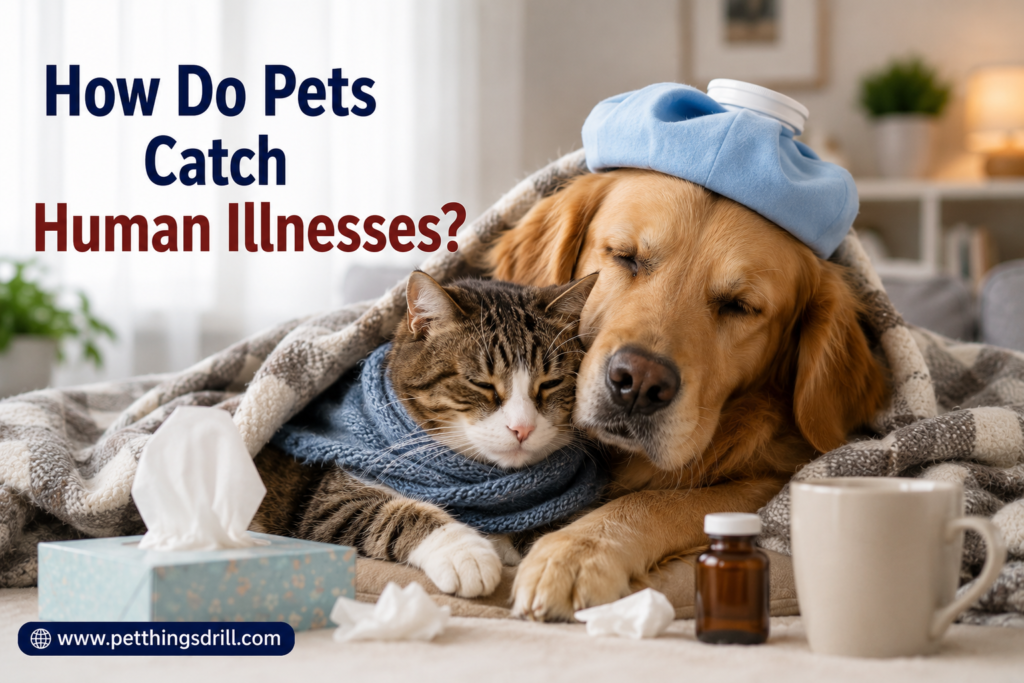
Transmission happens much the same way it does between two people. When you have the flu, your respiratory droplets enter the air every time you cough, sneeze, or even talk. If your pet is sitting right next to you, they can easily inhale those viral particles.
You might wonder, can dogs get the flu from humans at home through shared surfaces? Yes, they can. If you wipe your nose and then pet your dog, or if you leave used tissues where a curious cat can investigate them, you are providing a direct path for the virus. Furthermore, many people let their dogs lick their faces. While this shows affection, it also transfers a massive amount of germs directly to your pet.
Because viruses spread so easily in enclosed environments, pet owners must practice good hygiene. You need to treat your pets exactly as you would treat another human family member you are trying to protect from your illness.
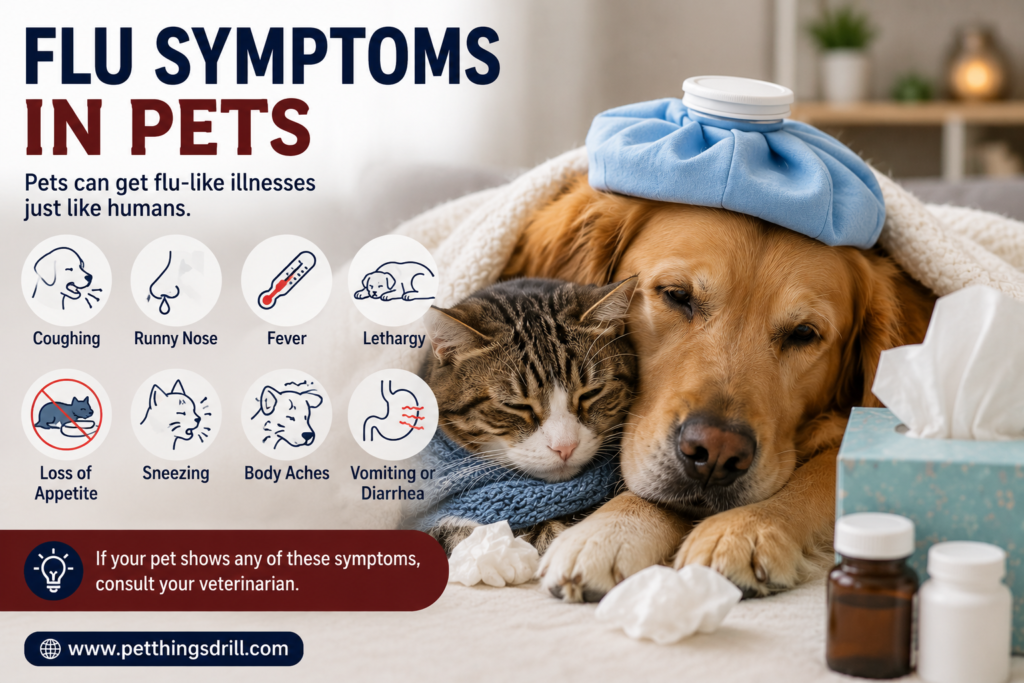
If you recently recovered from the flu and your pet starts acting strange, you need to know what symptoms to watch for. The signs of influenza in pets look remarkably similar to the symptoms we experience.
If you suspect your pet caught your bug, look out for the following respiratory and behavioral changes:
Many pet owners naturally panic when they ask, can cats and dogs get the flu from humans, but it is important to remember that most pets recover fully with supportive care. However, if your pet develops difficulty breathing, refuses to drink water for more than 24 hours, or becomes extremely lethargic, you must call your veterinarian immediately.
While we often use the word “flu” as a catch-all term, the respiratory flu (influenza) is completely different from the “stomach flu” (gastroenteritis). The stomach flu is usually caused by the norovirus in humans. This brings up another common question: can humans get the stomach flu from dogs, and vice versa?
Research into human norovirus shows that dogs can carry antibodies for it, suggesting they mount an immune response to the virus. Some studies even found traces of human norovirus in canine stool samples. However, there is currently no strong evidence showing that dogs suffer clinical illness from human norovirus, nor is there proof that dogs actively transmit the human stomach flu back to their owners.
Canine-specific noroviruses and coronaviruses do cause gastrointestinal distress in dogs, but these are separate from human strains. So, while you might wonder can humans get the stomach flu from dogs, the risk is incredibly low. Good hygiene, like washing your hands after picking up pet waste, easily eliminates this minimal risk.

Prevention is always the best medicine. When you feel the familiar aches and chills of the flu setting in, you should implement a quarantine protocol in your house.
Here are the most effective ways to stop the spread of illness to your pets:
It breaks the heart to push a comforting pet away, but it is necessary for their health. Try to keep your dog or cat out of your bedroom while you recover. Let another family member handle feeding, walking, and playing with the pets until you are no longer contagious.
Wash your hands frequently with soap and warm water, especially before preparing pet food or refilling water bowls. Use hand sanitizer if you cannot get to a sink. Always cover your coughs and sneezes, and dispose of your tissues immediately in a trash can with a secure lid.
Wipe down doorknobs, countertops, and other frequently touched surfaces. If your pet usually sleeps in your bed, wash your sheets and blankets in hot water to kill lingering viruses.
People frequently ask, can dogs get the flu virus from humans if the human is asymptomatic? You are most contagious when your symptoms are at their worst, but you can shed the virus a day before symptoms appear and up to a week after. Maintain your hygiene protocols even as you start feeling better.
Vaccines play a massive role in keeping our animal companions safe from severe diseases. However, there is no vaccine that protects pets from human influenza.
There are, however, vaccines for canine influenza. Canine influenza (CIV) is a completely different virus that spreads rapidly between dogs, particularly in boarding facilities, dog parks, and grooming salons. The canine flu vaccine will not protect your dog from your human flu, but it will protect them from the dog-specific strains that cause severe respiratory illness.
Cats do not have a specific influenza vaccine. Instead, veterinarians vaccinate them against common feline respiratory viruses like feline herpesvirus and feline calicivirus. These viruses cause the “cat flu,” which produces symptoms very similar to human influenza. Keeping your pets up to date on all their core vaccinations ensures their immune systems remain strong enough to fight off potential infections.
A strong immune system is your pet’s best defense against any illness, whether it comes from another animal or from you. You can support their natural defenses through proper nutrition, adequate exercise, and regular veterinary check-ups.
Feed your pet a high-quality, balanced diet rich in essential vitamins and minerals. Keep them hydrated by providing fresh, clean water daily. Regular exercise keeps their bodies conditioned and helps reduce stress, which can suppress immune function.
If you know your pet has a compromised immune system—perhaps due to old age, a chronic health condition, or certain medications—you must be extra vigilant when you get sick. These vulnerable pets face a much higher risk of developing complications if they catch a human virus.
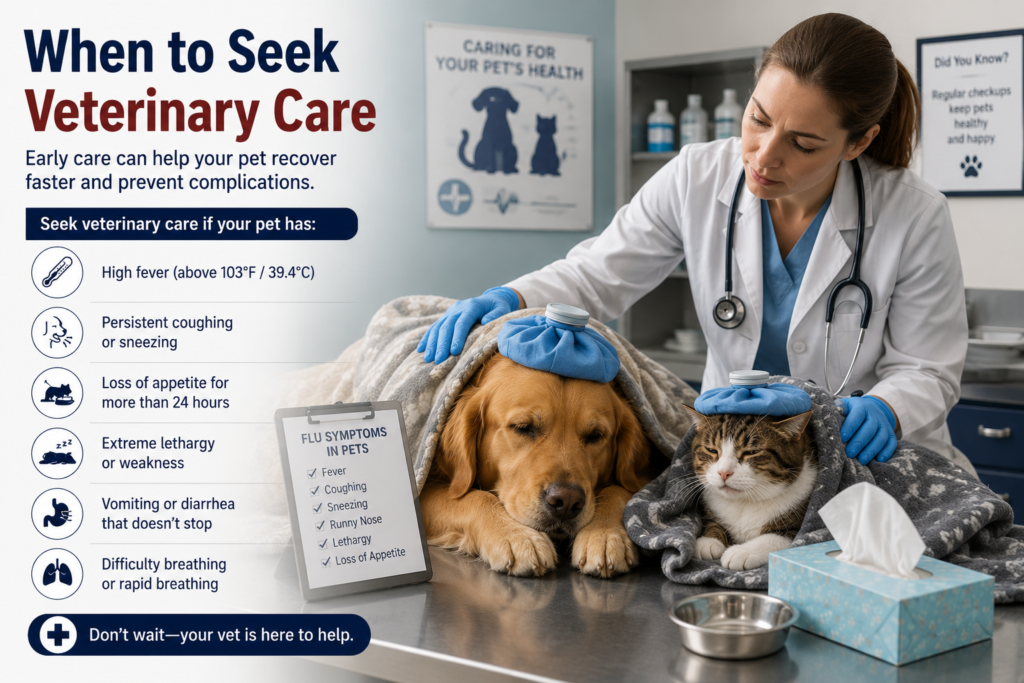
While you now know the answer to can cats and dogs get the flu from humans, you might still feel anxious if your pet starts sneezing. Most mild upper respiratory infections run their course in a week or two without medical intervention. You can help by keeping your pet warm, wiping away eye and nose discharge with a warm, damp cloth, and encouraging them to eat strong-smelling wet food if they lose their appetite. Keep a close eye habits like dog eating grass or other inedible items.
Never give your pet human cold or flu medication. Over-the-counter pain relievers like ibuprofen or acetaminophen are highly toxic, and often fatal, to dogs and cats. Decongestants can also cause severe poisoning.
If your pet’s symptoms worsen, or if they struggle to breathe, you must consult your vet. They might prescribe antibiotics to clear up secondary bacterial infections that often follow a viral attack. They can also provide intravenous fluids if your pet becomes severely dehydrated.
Sharing our lives with pets means navigating the occasional health scare. It is a relief to know that while viruses can jump the species barrier, it does not happen every time you catch a cold. The next time you find yourself bedridden with a fever, and you ask yourself can cats and dogs get the flu from humans, remember that the risk exists but is easily managed.
By practicing excellent hygiene, washing your hands, and limiting cuddle time while you are actively contagious, you protect your furry friends from unnecessary discomfort. Keep them current on their veterinary-recommended vaccines, feed them well, and monitor them closely for any signs of illness. Your pets rely on you to keep them safe, and with these simple precautions, you can ensure your entire household stays happy and healthy all year long.