18
Aug
Quick answer: Can cats eat corn? Yes, cats can eat plain, cooked corn in small amounts — it’s not toxic to them. However, corn offers little nutritional value for obligate carnivores and should never replace a protein-rich diet. Certain corn products, like corn chips and cornbread, can be harmful due to added salt, fat, or seasonings.
Corn is one of the most common ingredients in commercial cat food — yet most cat owners have never stopped to question whether it’s actually good for their pet. If your cat has been eyeing your popcorn bowl or sniffing around a corn cob at a summer cookout, you’re probably wondering whether to share. The answer is more nuanced than a simple yes or no.
This guide breaks down everything you need to know: what corn does (and doesn’t) offer your cat nutritionally, which corn-based foods to avoid, and when to call your vet.
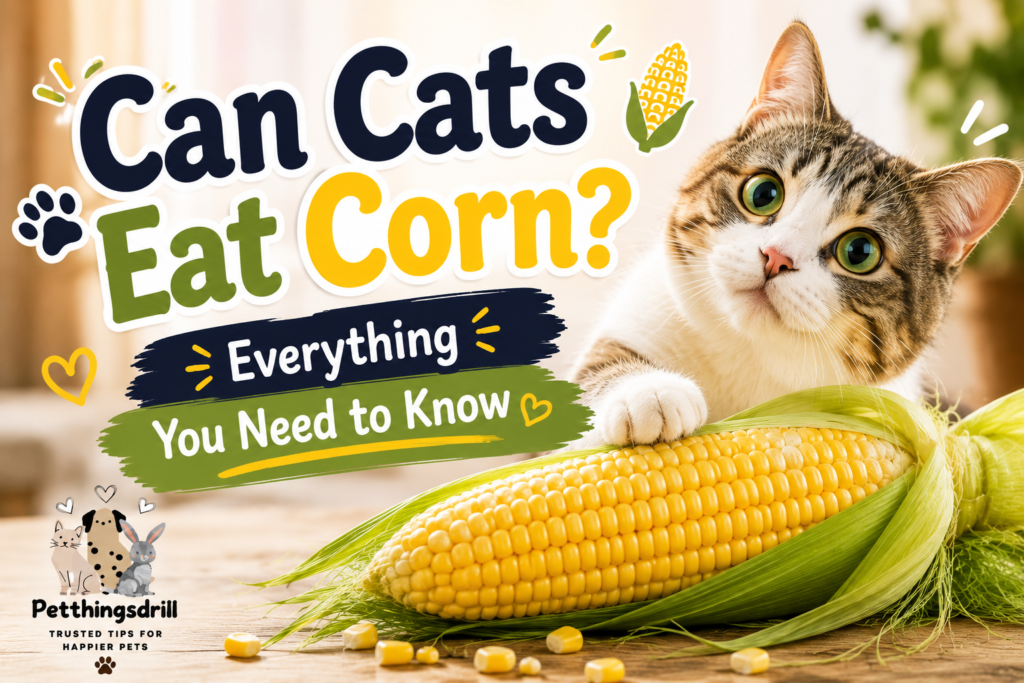
Cats are obligate carnivores — meaning their bodies are designed to run on animal protein, not plant matter. Unlike humans, cats lack the taste receptors to detect sweetness, so the natural sugars in corn hold zero appeal for them from a flavor standpoint.
That said, some cats are drawn to the texture or smell of corn rather than its taste. If your cat gravitates toward it, curiosity is the likely culprit, not a craving.
Plain, cooked corn is generally safe for cats in small amounts. It is not toxic, and many commercial cat foods already contain corn or corn derivatives as a filler ingredient. But “safe” and “beneficial” are two very different things.
Corn does contain some nutrients — fiber, carbohydrates, small amounts of protein, and vitamins like B6 and C. The problem is that cats don’t process plant-based nutrients the same way humans do. Their digestive systems are optimized for meat, and they derive very little usable nutrition from corn.
So while corn won’t hurt your cat in moderation, it contributes almost nothing meaningful to their diet.
A few caveats are worth noting:
The bottom line? Occasional, plain corn in very small portions is unlikely to harm a healthy adult cat. Make it a habit, though, and the risks start to outweigh any negligible benefits.
This one warrants a firm no. The cob itself is a serious hazard — it’s tough, fibrous, and nearly impossible for cats to digest. If swallowed, pieces of the cob can cause an intestinal blockage, which is a medical emergency requiring immediate veterinary attention.
If you want to let your cat sample corn, remove the kernels from the cob completely and offer only a small amount of plain, cooked corn. Be mindful of what food items to offer to the cat.
Corn husks are another hard no. They pose the same risks as the cob: tough to chew, impossible to digest, and a potential choking or blockage hazard. There is no nutritional reason to offer husks to your cat, and the risks are real enough to avoid them entirely.

Beyond plain corn, there’s a whole range of corn-based foods that cats may encounter. Here’s how each one stacks up.
Cornbread is not toxic, but it’s not a good choice for cats. It’s high in carbohydrates, often contains added sugar, butter, salt, and sometimes dairy — none of which are appropriate for cats. Some cornbread recipes also include baking powder or xylitol, the latter of which is toxic to pets. Keep cornbread off the menu.
Plain flour or corn tortillas are unlikely to cause immediate harm in a small nibble, but they offer absolutely nothing of nutritional value to a cat. Most tortillas are also high in sodium and refined carbohydrates. Store-bought tortillas may also contain preservatives or additives that aren’t ideal for feline digestion. Occasional tiny amounts probably won’t hurt, but there’s no reason to make it a habit.
No — corn chips should be kept away from cats. The primary concern is sodium. Cats are highly sensitive to salt, and even a small serving of corn chips can deliver far more than a cat’s daily recommended intake. Symptoms of salt toxicity in cats include excessive thirst, lethargy, vomiting, and in severe cases, tremors or seizures. Many corn chips also contain onion or garlic powder, both of which are toxic to cats.
Plain cornstarch is not toxic to cats and is occasionally used in small amounts in commercial cat food as a binding agent. In tiny quantities, it’s unlikely to cause harm. That said, cornstarch is a pure carbohydrate with zero nutritional value for cats, so there’s no reason to offer it deliberately.
Despite the name, corned beef has nothing to do with corn. The “corned” refers to the large salt crystals (or “corns” of salt) used to cure the meat. Corned beef is extremely high in sodium and often includes spices like garlic, mustard seeds, and bay leaves — all of which can be harmful to cats. While beef itself is fine for cats, corned beef is a processed product your cat should avoid entirely.
Kittens have more sensitive digestive systems than adult cats and require a diet specifically formulated to support rapid growth — which means high-quality animal protein, healthy fats, and the right balance of vitamins and minerals. Corn provides none of these essentials in any meaningful way.
It’s best to avoid giving kittens corn altogether. Their small bodies are simply not equipped to handle the digestive disruption that corn can sometimes cause, and the nutritional tradeoff isn’t worth it at such a critical stage of development.
Can cats eat corn without it being an emergency? Yes. Should corn be a regular part of your cat’s diet? No. Plain, cooked corn kernels are safe in very small, infrequent amounts for healthy adult cats. Everything else — the cob, the husk, and most corn-based processed foods — is best avoided.
When in doubt, check the ingredient list, skip the seasoning, and always consult your veterinarian before introducing new foods, especially if your cat has a history of digestive issues, allergies, or weight problems.
Is corn a common ingredient in cat food?
Yes. Corn, corn meal, and corn gluten meal appear frequently in commercial dry cat food as filler ingredients. While not harmful in regulated amounts, high-corn formulas tend to be lower in animal protein — the primary nutrient cats need.
What happens if my cat eats a corn chip?
A single chip is unlikely to cause serious harm, but watch for signs of salt sensitivity: excessive thirst, vomiting, or lethargy. If your cat eats a large quantity or shows concerning symptoms, contact your vet promptly.
Can cats eat popcorn?
Plain, air-popped popcorn without salt, butter, or flavorings is not toxic to cats. However, unpopped kernels are a choking hazard, and most commercially prepared popcorn contains far too much salt or artificial flavoring to be safe. It’s better to skip it.
How much corn can I safely give my cat?
If you choose to offer corn, limit it to a few plain, cooked kernels as an occasional treat — no more than once or twice a week. This minimizes the risk of digestive upset or unwanted weight gain.
Are cats allergic to corn?
Some cats are. Corn is one of the more frequently reported food allergens in cats. Signs of a corn allergy include skin irritation, hair loss, chronic vomiting, or diarrhea. If you notice any of these symptoms after your cat eats corn, stop offering it and speak with your vet.
Corn is one of those foods that occupies a gray area in feline nutrition — not dangerous, but far from useful. The safest approach is to treat it as an occasional curiosity rather than a dietary staple. Prioritize a high-protein, meat-based diet, and when your cat inevitably tries to steal a kernel from your plate, you can let them — just make sure it’s plain, cooked, and cob-free.
When it comes to your cat’s long-term health, a conversation with your veterinarian is always the smartest move before adding anything new to their diet.