
25
Jun
Can dogs eat marshmallows? If your pup has ever stared longingly at the bag of fluffy white treats in your hand, you’ve probably wondered whether sharing one is harmless or a mistake. Marshmallows seem soft, sweet, and innocent. But what’s a fun campfire snack for you can be a real problem for your dog. The truth is layered, and the answer depends a lot on what’s actually in the marshmallow. Below, you’ll find clear, honest guidance on the risks, the ingredients to fear, and what to do if your dog gets into a bag.
Regular marshmallows aren’t toxic to dogs in the way chocolate or grapes are. So if you’re asking “are marshmallows safe for dogs,” the short version is that a single plain marshmallow usually won’t poison your pet. But “not instantly toxic” is very different from “good for them.”
Marshmallows offer zero nutritional value for dogs. They’re basically sugar, air, and gelatin with little else. Feeding them regularly opens the door to weight gain, dental trouble, and digestive upset. And one specific ingredient—found in many sugar-free versions—can be deadly. We’ll get to that shortly.
To understand the risks, it helps to know what you’re handing over. Most standard marshmallows contain:
None of these provide anything your dog needs. So even before we talk about danger, marshmallows are simply empty calories.
Sugar is the headline issue with regular marshmallows. Dogs aren’t built to handle large amounts of it, and the effects add up faster than you’d think.
A steady stream of sugary treats can lead to:
So while one marshmallow won’t trigger these overnight, making them a habit can. If you’ve searched “can my dog eat marshmallows” as a regular reward, the honest answer is that there are far better choices.
Here’s the part that matters most. Many sugar-free or “diet” marshmallows contain xylitol, an artificial sweetener that is extremely toxic to dogs—even in tiny amounts.
Xylitol causes a dog’s body to release a sudden surge of insulin. That can crash their blood sugar dangerously low within minutes. It can also lead to liver failure. Symptoms appear fast and include:
If you suspect your dog ate anything containing xylitol, this is a genuine emergency. Don’t wait for symptoms—call your vet or an animal poison control line right away. Always check the label before assuming a marshmallow is safe.
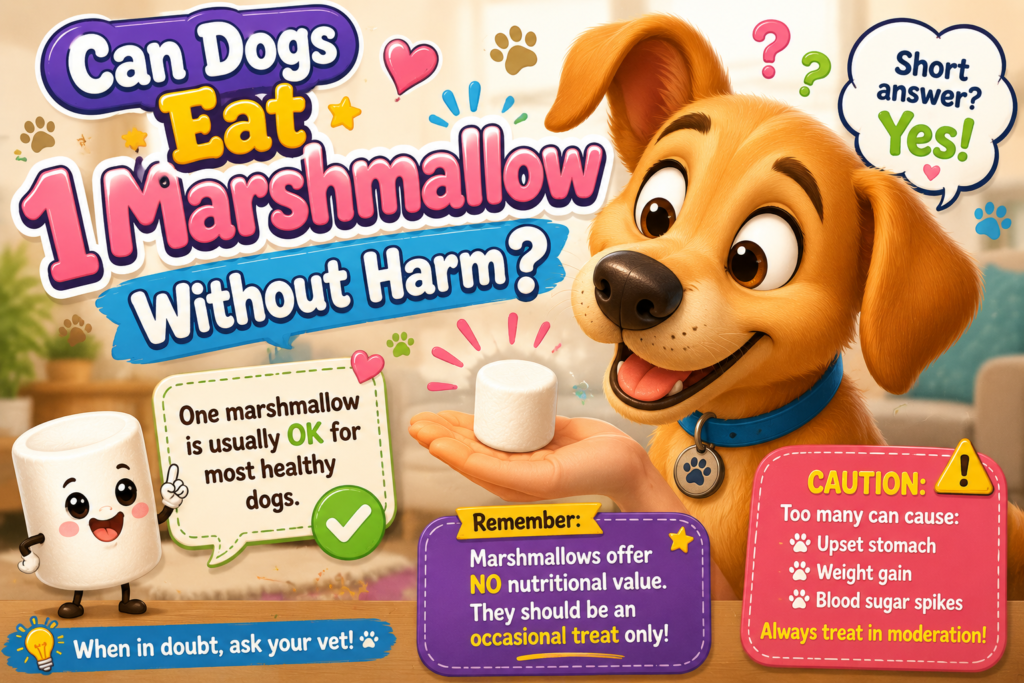
This is one of the most common worries. The good news: if you’re wondering “can dogs eat 1 marshmallow” and it was a plain, regular, sugar-based one, your dog will most likely be fine. A single small treat rarely causes more than a brief tummy upset, if anything at all.
The key word is plain. The danger isn’t usually the one marshmallow itself—it’s whether it contained xylitol, or whether your dog raided the whole bag. So can a dog eat a marshmallow on a rare occasion? Generally yes, as long as it’s xylitol-free and stays an exception rather than a routine.
Marshmallows are soft, but they’re also sticky and squishy. For some dogs—especially small breeds or fast gulpers—a whole marshmallow can become a choking hazard. The gummy texture can briefly stick in the throat before it’s swallowed.
This is worth keeping in mind if you’re curious whether a dog can eat marshmallows raw straight from the bag. Soft as they are, they’re best avoided rather than tossed whole to an excited pup.
Not all marshmallows are the same, and the form they come in changes the conversation a little.
Mini marshmallows pose the same ingredient risks as full-size ones, just in smaller bites. Some owners assume tiny means safe, but the danger lies in quantity. A dog can hoover up a handful of minis in seconds, quickly adding up the sugar. So while you might ask “can dogs eat mini marshmallows,” the smaller size can actually make overeating easier.
Marshmallow fluff is even more concentrated and sticky than the regular kind. It’s loaded with sugar and corn syrup, and the spreadable texture can cling to your dog’s mouth and teeth. If you’re wondering whether dogs can eat marshmallow fluff, the answer leans toward a firm no—it offers all the downsides with none of the benefits.
Brand-name treats like Jet-Puffed are standard sugar marshmallows. So can dogs eat Jet Puffed marshmallows? In a single, plain piece, they’re no more dangerous than any other regular marshmallow. They still carry the sugar concerns, and you should always confirm the variety isn’t a sugar-free one with xylitol.
Plenty of owners want a fun reward to share, so it’s natural to ask whether dogs can eat marshmallows as a treat. Technically, an occasional plain marshmallow won’t cause harm to most healthy dogs. But it shouldn’t be your go-to reward. Treats should make up no more than about 10% of your dog’s daily calories, and marshmallows fill that quota with pure sugar and nothing useful.
If you want your dog to truly benefit from treat time, there are smarter options—more on those in a moment. In fact, choose healthy dog treats for your pup.
Sometimes accidents happen. Maybe the bag fell off the counter, or a curious nose found the pantry. Here’s how to respond calmly and effectively:
Never try to make your dog vomit unless a veterinarian specifically tells you to.
After your dog eats marshmallows, keep an eye out for dog health warning signs. With plain marshmallows, you might see mild digestive issues. With xylitol, symptoms are far more serious and fast-moving.
Watch for:
The first few signs may be harmless tummy trouble. The last few are red flags that demand emergency care.
The best way to stop worrying about whether your dog can eat a marshmallow is to keep better treats on hand. Dogs love texture and flavor, and you can give them both without the sugar overload.
Try these instead:
These options give your pup that special-treat feeling while keeping their body healthy.
If you only remember a few things, make them these. A single plain marshmallow rarely harms a healthy dog, but sugar-free versions with xylitol can be life-threatening. Regular feeding leads to weight gain, dental problems, and diabetes risk. And whether you’re asking “can my dog eat a marshmallow” or “can dog eat marshmallows” on the regular, the smarter move is always a healthier snack.
So, can dogs eat marshmallows? They can survive an occasional plain one, but marshmallows are never a good treat choice. They bring nothing but empty sugar, possible stomach upset, and—if they contain xylitol—a genuine risk to your dog’s life. There’s simply no benefit that makes them worth the gamble.
If your dog ever sneaks one, check the label, watch for symptoms, and call your vet when anything seems off. The safest path is the simplest one: skip the marshmallows and reach for a dog-friendly treat instead. Your pup gets the joy of a reward, and you get peace of mind knowing it’s good for them.

